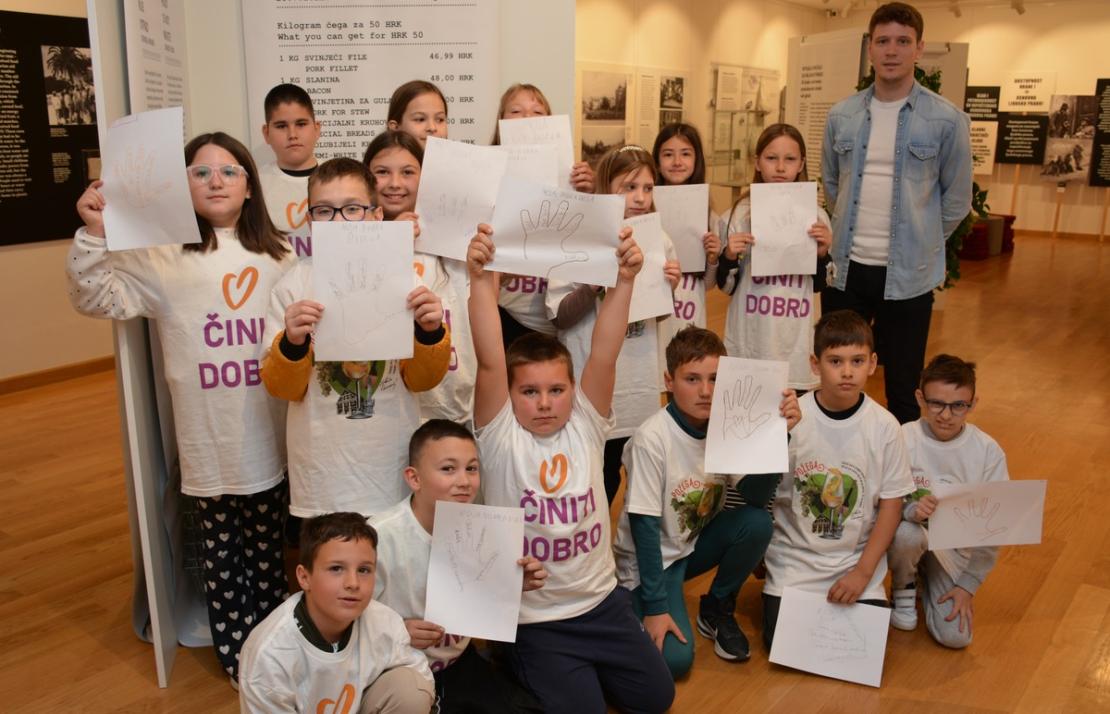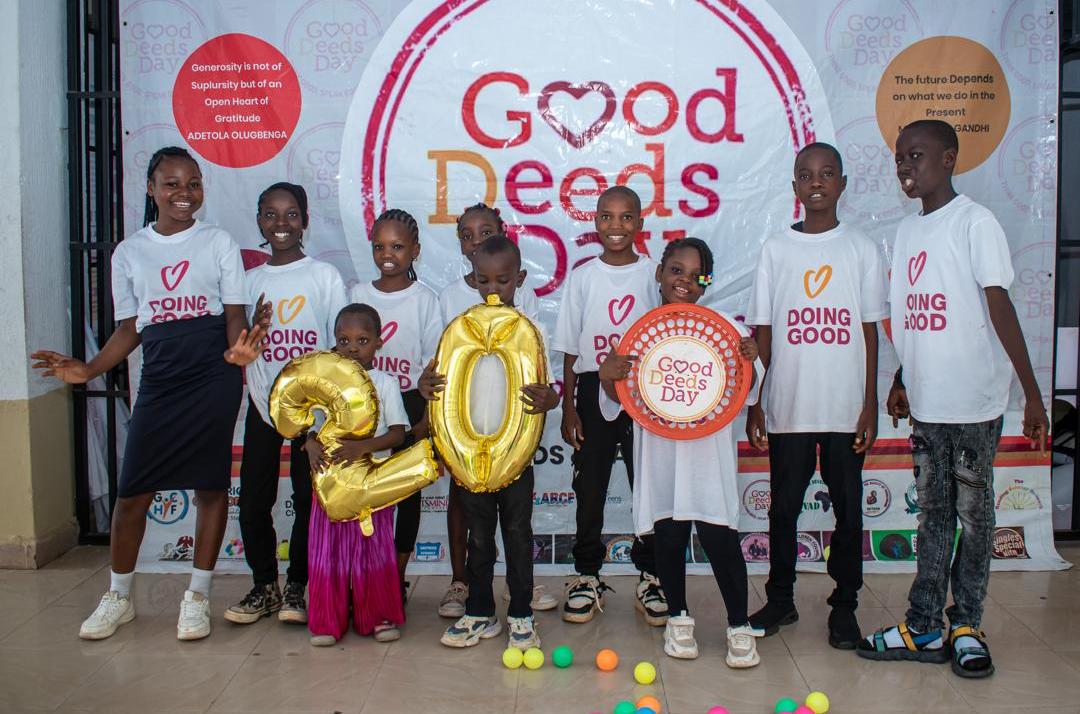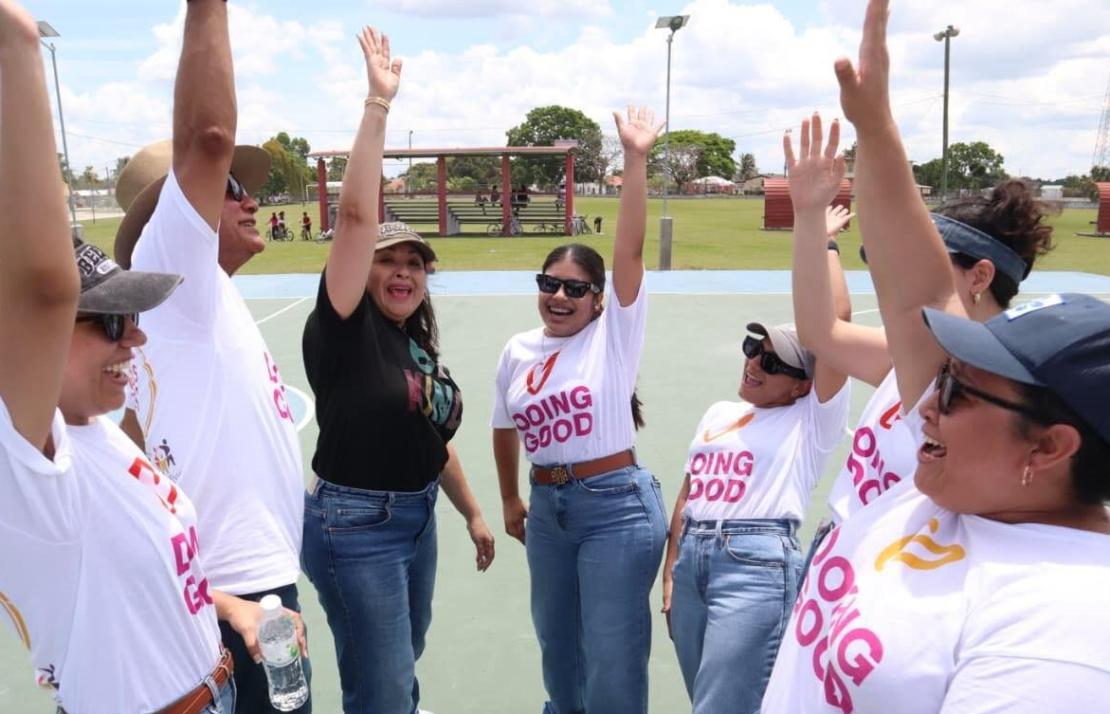
How does doing good strengthen relationships between people? Does it help communities become better able to organize and act together? Can one day of action lead to stronger local networks, sustained partnerships, and continued doing good throughout the year?
These are increasingly important questions for Good Deeds Day.
Over the past several years, Good Deeds Day has been developing a deeper way of looking at the impact of doing good: not only how many people participate, but what changes they have because they participated.
The 2026 findings provide some of the clearest evidence: Doing Good can contribute to the social foundations communities need to become stronger and more resilient.
GDD 2026: Global Action at Scale
Good Deeds Day 2026 once again demonstrated the extraordinary reach of a global movement built around one simple idea: everyone can do something good.
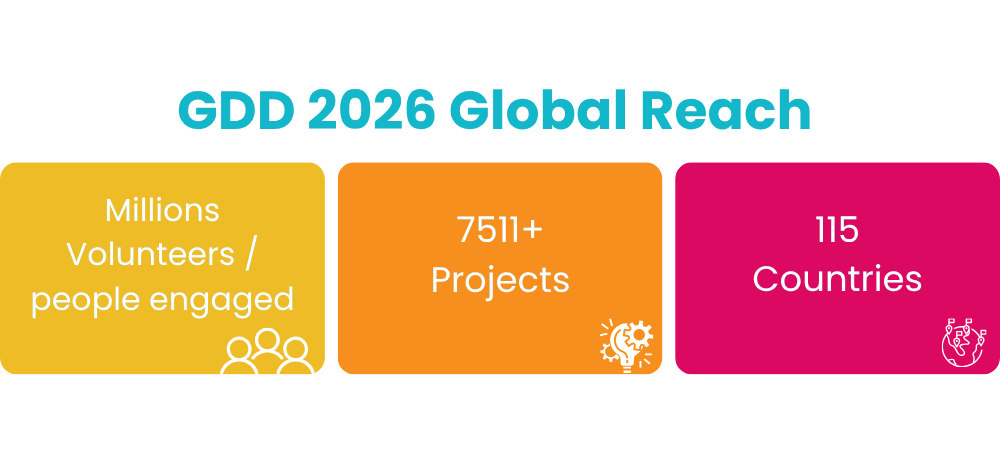
Across 115 countries, millions of people took part in more than 7,500 reported projects, responding to needs ranging from health and education to hunger, inclusion, environmental action, community development, and partnership-building.
But numbers like these tell us about the scale of Good Deeds Day.
The more important question is what happens within communities when people come together to act.
What Does Community Resilience Actually Mean?
Community resilience is sometimes associated only with emergencies or disasters. In reality, it is much broader.
Community resilience depends on collective awareness and involvement: It is the ability of people within a community to adapt collectively, respond to challenges, take meaningful action, and improve life together.
Good Deeds Day focuses particularly on building community resilience: doing good, leadership, inclusion, community connections, and shared responsibility.
Building more resilient communities takes time, but it begins with strengthening connections, between institutions within a community such as the corporate sector, government agencies, nonprofit organizations, mutual aid groups, and faith-based organizations.
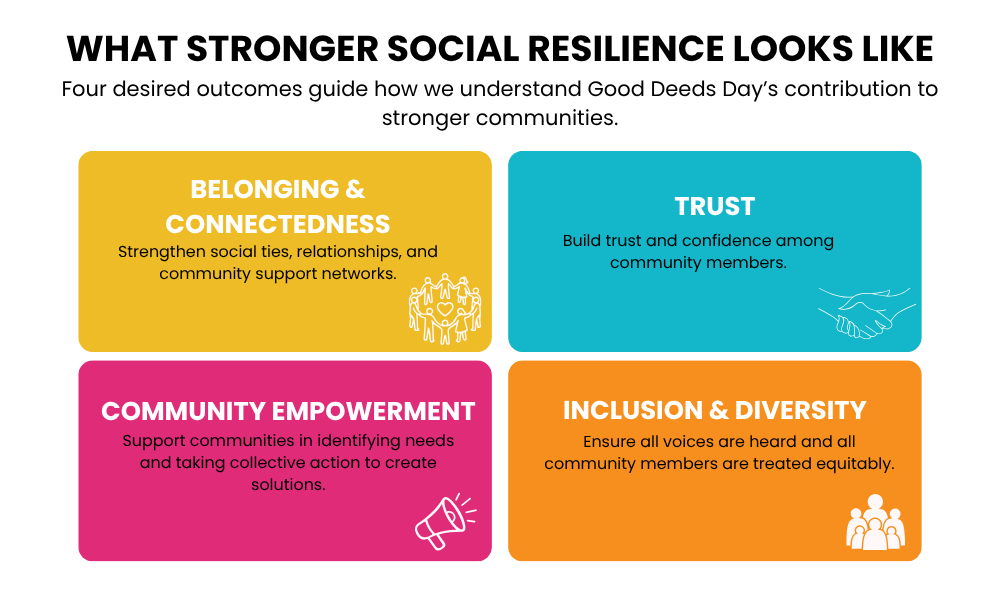
Through our work, we look at four interconnected outcomes:
- Belonging and connectedness – strengthening relationships, social ties, and community support networks.
- Trust – building confidence between people and creating relationships that make cooperation possible.
- Community empowerment – helping communities identify their own needs and take collective action to address them.
- Inclusion and diversity – creating opportunities for different people and voices to participate meaningfully and equitably.
These outcomes help us look beyond the question, “How many people volunteered?” and ask instead, “What became stronger because they volunteered together?”
The Strongest Result: People Felt They Made a Meaningful Contribution
One of the clearest findings from 2026 came from organizations participating in Good Deeds Day.
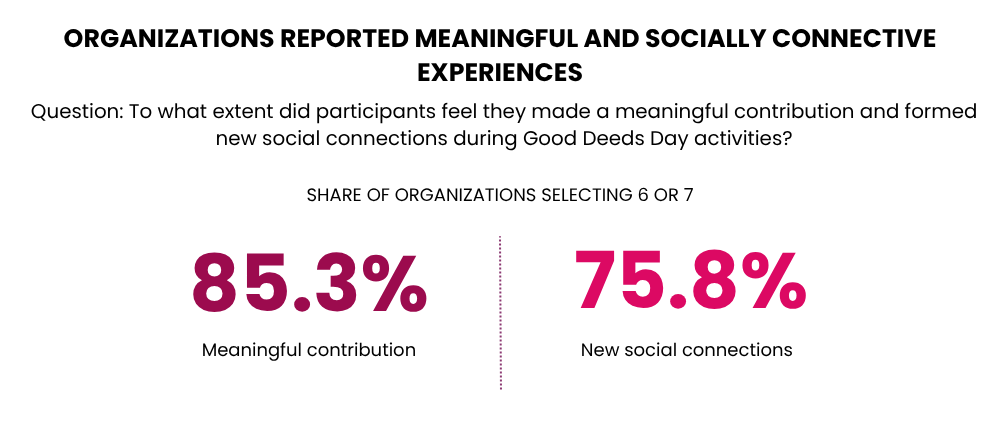
85.3% of responding organizations gave the highest ratings when asked whether participants felt they had made a meaningful contribution.
At the same time, 75.8% gave the highest ratings for participants forming new social connections.
That combination matters.
Doing good can accomplish an immediate task – cleaning a park, preparing food, supporting children, visiting older adults or improving a community space – but its impact can go further when people also feel that their contribution mattered and that they became more connected to others in the process.
The 2026 analysis reinforces this. Participant experiences were positively connected, and organizations reporting stronger opportunities for meaningful contribution and new relationships also tended to report stronger identification with Good Deeds Day and a greater sense that people wanted to contribute to society. The data shows association rather than proof of causation, but it points toward an important lesson: how people experience doing good matters as much as what they accomplish.
Belonging, Trust and the Ability to Act Are Connected
The findings also suggest that the different dimensions of resilient communities do not exist separately.
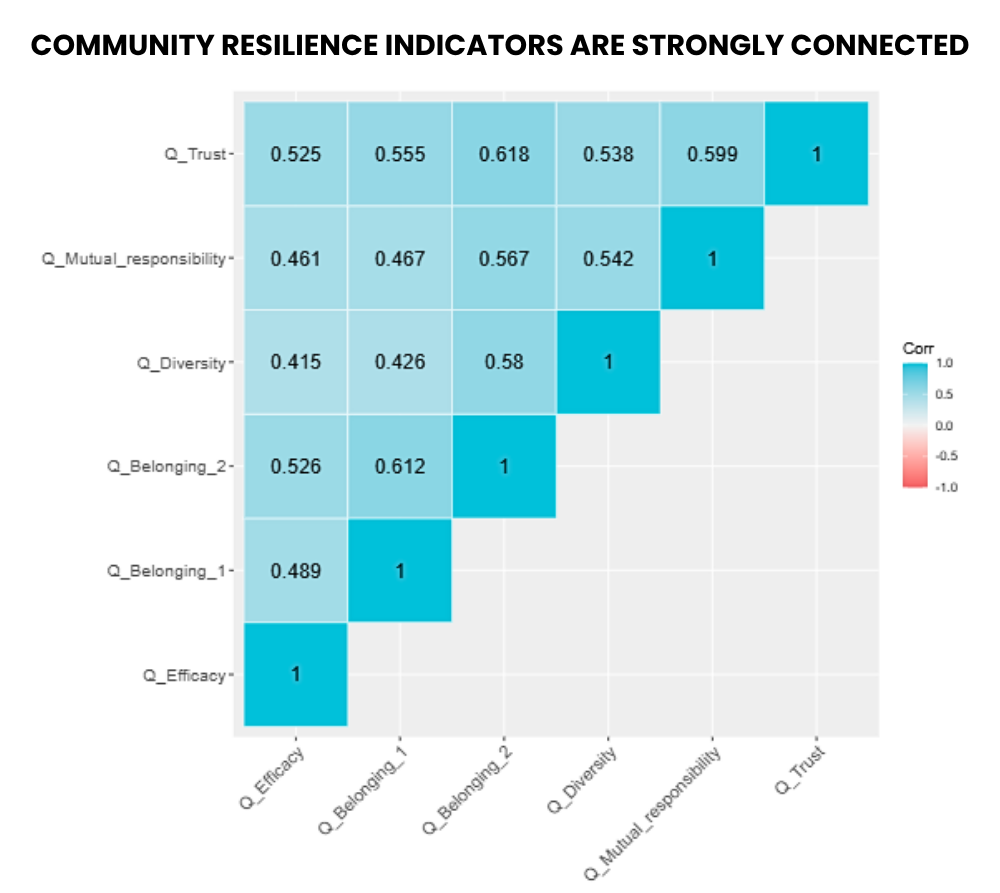
Across the community-resilience measures, stronger results in one area tend to be associated with stronger results in others. Trust was closely connected with belonging and mutual responsibility. Among participating organizations, community efficacy – the sense that people can act together and create change – was strongly associated with community identity, while inclusion was strongly associated with mutual responsibility.
In simpler terms:
When people feel that they belong, are included, and can trust one another, they may also be better positioned to work together.
This is one of the most important lessons emerging from the Good Deeds Day data.
Doing good does not need to be enormous to contribute to community resilience. Sometimes the deeper impact is created by bringing people together who would not normally meet, giving them a shared purpose, and showing them what they can accomplish together.
Communities Were Already Strong – and Continued to Show Strength
Good Deeds Day leaders rated their communities highly across all six resilience indicators measured in 2026. All averaged at least 6 out of 7, with particularly positive movement in community efficacy and shared values between the pre- and post-Good Deeds Day survey groups. Because the surveys involved separate respondent samples, these results should be understood as a descriptive comparison rather than a direct before-and-after measurement of the same people.
The broader finding is nevertheless important: Good Deeds Day is operating within communities that already possess considerable social strengths, while creating opportunities to reinforce the relationships, confidence and collective action that support those strengths.
That changes the way we think about impact.
Doing good does not simply arrive and “fix” a community. Instead, it can help people activate assets that already exist – relationships, knowledge, leadership, local organizations, creativity, and willingness to help.
Local Action Can Meet Today’s Needs While Building Capacity for Tomorrow
The last two years projects themselves show how these two forms of impact can happen at the same time.
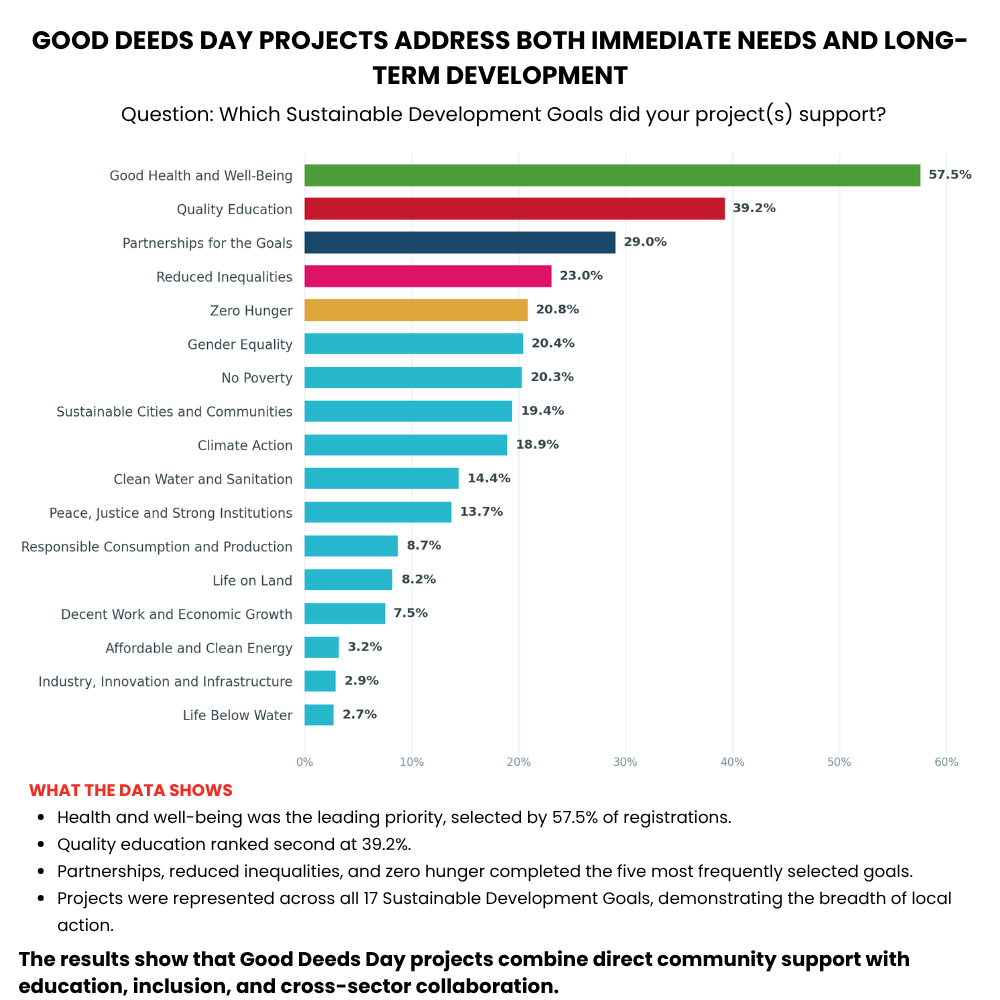
Health and well-being were the most frequently identified Sustainable Development Goal among registered projects, followed by quality education. Projects also addressed partnerships, reduced inequalities, hunger and every other SDG.
Many projects therefore met an immediate need while also building something that could remain with the community afterward.
In Malawi, for example, women with disabilities participated in practical hairdressing training. The activity offered more than a one-day experience: participants developed vocational skills that could support income generation while promoting confidence, inclusion and self-reliance.
In Togo, a community clean-up mobilized more than 500 people, while other Good Deeds Day activities supported entrepreneurship skills for young women and taught 29 farmers to produce their own bio-inputs. The activities combined community participation with practical skills and longer-term self-reliance.
These examples illustrate an important principle:
A strong volunteer project asks not only what people need today, but what skills, relationships, confidence or resources can remain after the activity is finished.
One Day Can Become a Year-Round Habit
Another important finding from 2026 is that Good Deeds Day increasingly functions as more than an isolated annual event.
More than half of responding organizations had participated in Good Deeds Day before 2026. Among organizations for which participation-history data could be interpreted, 48.9% had participated in at least two previous years, and 23.7% had participated in four or more previous editions.
In China, the Qingyi Social Work Center went even further by creating a 365 Public Welfare Activity Toolkit and a calendar of activities throughout the year, turning the idea of doing good into an ongoing practice rather than an annual moment.
This continued participation matters because community resilience is not built through a single activity.
It develops through repeated relationships, shared experiences and opportunities for people to continue contributing.
A Good Deeds Day project can be the beginning of that process.
Strong Communities Need Strong Networks
Community resilience also depends on what exists between organizations.
Good Deeds Day projects regularly connect nonprofits, schools, municipalities, businesses, community groups and volunteers around shared local goals. In the 2026 survey, 94.7% of leaders described participating organizations as moderately or highly engaged, suggesting that organizations were not simply hosting volunteers – they were active partners in the movement.
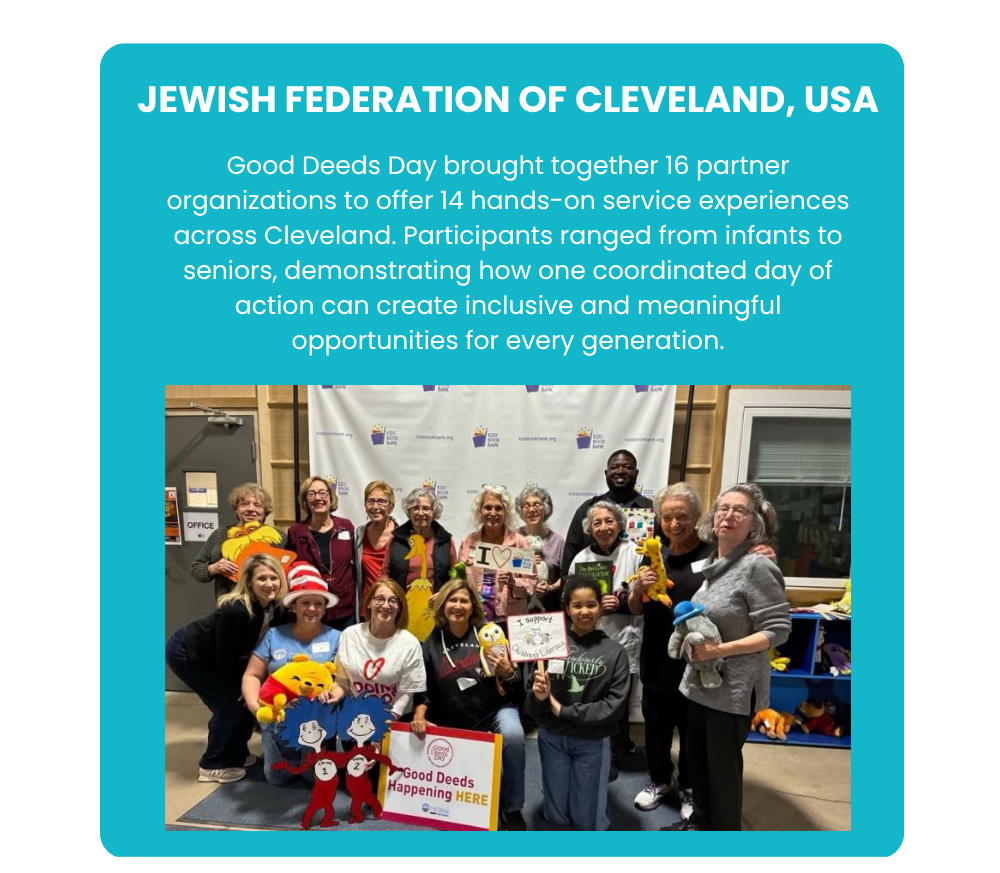
In Cleveland, United States, for example, the Jewish Federation of Cleveland brought together 16 partner organizations to offer 14 service experiences involving 214 volunteers. Participants ranged from infants to older adults, demonstrating how collaboration can make community participation accessible across generations.
In Honduras, Good Deeds Day activities involved 18 partners, eight educational institutions and three departments, showing how Doing good initiatives can create a wider network around community action.
These relationships are part of the impact.
A community with organizations that already know how to communicate, collaborate and mobilize people has greater capacity to respond when new needs arise.
A Global Network Can Strengthen Local Solutions
Good Deeds Day also creates something unusual: a global network in which ideas can travel from one community to another.
In 2026, 64.5% of responding leaders reported implementing at least one project inspired by an idea from another country, while 46.2% implemented two or more. Altogether, leaders reported 288 cross-country-inspired projects.
Ukraine provides a powerful example.
Good Deeds Day leaders there reported implementing 20 projects inspired by activities in other countries, adapting ideas to priorities including food security, active aging and community support. One event in Kryvyi Rih brought together more than 1,000 participants and 70 partners, while activities in cities near the front lines created opportunities for connection and mutual support.
The important point is not copying a project exactly.
It is the ability to see what worked elsewhere, learn from it, and redesign it for a completely different local reality.
That is another form of resilience: communities learning from one another.
Doing Good Can Strengthen the Systems Around a Community Too
Sometimes the impact extends beyond individual volunteers and local activities.
In Kenya, sustained collaboration between Good Deeds Day and the Ministry of Labor and Social Protection contributed to the development of the country’s National Volunteerism Policy and related legal frameworks. Good Deeds Day was reported as being recognized as a key national event within that policy.
Across the wider network, 79.8% of surveyed leaders reported participation by government officials in Good Deeds Day 2026.
For participants, this helps reveal another dimension of doing good that is easy to miss.
A day of community action can create visibility. Visibility can build relationships. Relationships can become partnerships. And partnerships can eventually influence how doing good is supported at a local or even national level.
Beyond Counting Volunteers
Participation numbers will always matter. They tell us whether people are showing up and demonstrate the extraordinary scale of a global volunteer movement.
But they cannot tell the whole story.
The deeper impact of Good Deeds Day can be found in the relationships created between people who had never met before; in someone discovering that they have something valuable to contribute; in organizations deciding to work together again; in a community identifying its own solution to a challenge; in an idea traveling from one country to another; or in volunteers choosing to continue long after the official day has ended.
This is why Good Deeds Day is increasingly looking beyond counting volunteers.
Our goal is DOING GOOD to strengthen belonging, trust, inclusion, shared responsibility and the confidence to act together, the community development foundations that help communities navigate challenges and create change for themselves. This outcome-oriented approach is also at the heart of Good Deeds Day’s continuing work to understand how volunteer action can intentionally create and measure community-level changes.
And the 2026 findings give us encouraging evidence that, across very different communities around the world, DOING GOOD together can help build stronger and more resilient communities.
For the full data report in your preferred language:
(English | Español | Français)